


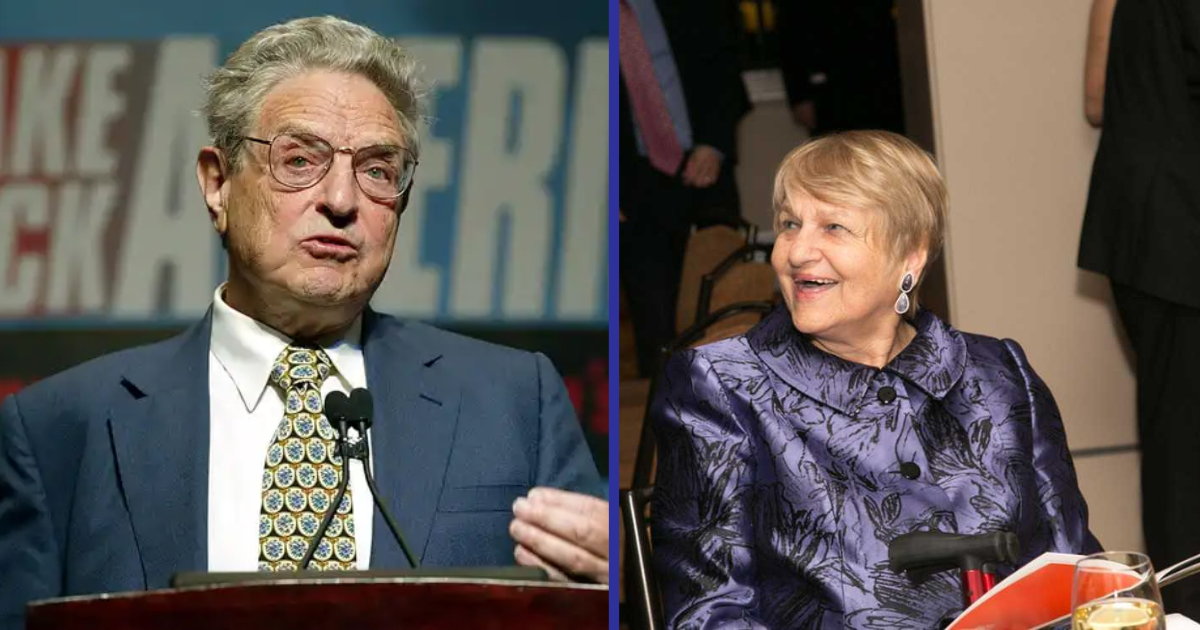
Annaliese Witschak is usually introduced with one familiar label: George Soros’s first wife. That description is accurate, but it leaves out much of what is now documented about her life. Born in northern Germany, she endured profound family loss, built a new life in New York, raised three children, became an enthusiastic supporter of classical music, and eventually wrote a book about entertaining. One especially important update corrects many older online profiles: Witschak, who later used the name Annaliese Soros, died in September 2025 at the age of 91.
Annaliese Witschak: Quick Bio
| Detail | Information |
|---|---|
| Full name | Annaliese Witschak |
| Also known as | Annaliese Soros |
| Date of birth | January 3, 1934 |
| Birthplace | Verden an der Aller, Germany |
| Date of death | September 5, 2025 |
| Age at death | 91 |
| Nationality/background | German-born; later lived in the United States |
| Best known for | First wife of George Soros; classical music patron and author |
| Spouse | George Soros, married in 1960 and divorced in 1983 |
| Children | Robert Soros, Andrea Soros Colombel, and Jonathan Soros |
| Number of children | 3 |
| Early career | Worked in secretarial and administrative roles after moving to New York |
| Notable interests | Classical music, opera, travel, entertaining, and arts patronage |
| Arts involvement | Longtime board member and supporter of Young Concert Artists |
| Book | Dinner Party Disasters: True Stories of Culinary Catastrophe |
| Book published | 2007 |
| Co-author | Abigail Stokes |
| Later life | Remained active in New York cultural and classical-music circles |
| Cause of death | Reported as natural causes |
Who Was Annaliese Witschak?
Annaliese Witschak was a German-born New Yorker best known publicly for her long marriage to financier and philanthropist George Soros. She was born on January 3, 1934, in Verden an der Aller in northern Germany, according to the family obituary published by The New York Times and reproduced by Legacy. Far from being merely a private figure attached to a famous surname, her later life included decades of involvement with classical music organizations, extensive entertaining and cultural patronage. She also became known among friends and arts circles as an accomplished host.
That fuller picture matters because many short biographies of Annaliese Witschak concentrate almost entirely on Soros, his fortune and their divorce. Her own interests are much better documented than those profiles suggest. Young Concert Artists said after her death that she had served on its board for more than 40 years and supported emerging musicians in several practical ways. Her story therefore belongs partly to celebrity biography, but also to New York’s cultural and philanthropic world.
What Was Annaliese Witschak’s Early Life Really Like?
One of the most repeated claims online is that Witschak was simply a German orphan whose parents died during World War II. The more detailed family obituary gives a different and more precise timeline. Her father, Walter Witschak, died in 1937, before the war began in Europe, and her mother Elisabeth subsequently moved the family to Neuenkirchen bei Soltau. Annaliese became an orphan at 16 after her mother and her only brother, Hans, died within six months of each other.
That distinction is worth preserving. Witschak certainly grew up amid the upheaval and deprivation surrounding wartime and postwar Germany, but saying that both of her parents were killed or died during World War II does not match the more detailed chronology now available. Her obituary describes a childhood involving considerable household and farm work, while school and music provided an important counterweight. A music teacher encouraged her interest in piano, chorus and opera—an interest that would resurface prominently decades later.
Higher education was apparently not an immediate option. According to the obituary, relatives directed her toward secretarial training, after which she moved to Hamburg and worked in publishing and later for Shell Oil. In 1955, she left Germany for New York. A 2011 Welt am Sonntag profile independently places her arrival in Manhattan that year, describing her as a young German immigrant with secretarial training trying to establish herself in the city.
How Did Annaliese Witschak Meet George Soros?
After arriving in New York, Witschak found work as a secretary and keypunch operator for an insurance company. Her family obituary says she met George Soros in 1957, one year after he had emigrated to the United States. Soros’s own institutional biography confirms that he moved to the U.S. in 1956 after previously living and studying in London.
They married in 1960. The obituary says the couple initially lived in Greenwich Village and later on Central Park West, while a detailed Encyclopedia.com biography records a September 17, 1960 marriage date. At that point Soros was building his career in finance; the international prominence, investment success and large-scale philanthropy associated with his later public reputation were still ahead.
Their household also developed a social identity of its own. The family obituary describes regular entertaining that brought writers, academics and other intellectually engaged guests into their home. Witschak taught herself to cook and became increasingly associated with hosting—something that eventually became part of her public identity rather than simply a detail of her marriage.
How Many Children Did Annaliese Witschak Have?
Annaliese Witschak and George Soros had three children together: Robert, Andrea and Jonathan Soros. Public biographical references consistently identify the three as children from Soros’s first marriage. Andrea Soros Colombel later established the Trace Foundation, which says it was founded in 1993 following her experiences on the Tibetan Plateau; the organization’s current site identifies her as its president.
It is tempting in celebrity profiles to attribute children’s later achievements directly to a parent’s personality or upbringing. There is not enough reliable evidence to do that here. What can be said is that family remained central to Witschak’s own public remembrance: her obituary emphasized her roles as a mother and grandmother, and her son Jonathan publicly shared news of her death in 2025.
When Did Annaliese Witschak and George Soros Separate?
The timeline deserves some care because published sources do not agree perfectly. The 2025 family obituary says Annaliese and George Soros split in 1977, while a 2011 Welt am Sonntag profile places their separation in 1978. Their marriage is commonly recorded as ending legally in 1983, with a detailed Encyclopedia.com entry giving June 1983 as the divorce date.
That means the safest editorial wording is that they separated in the late 1970s and divorced in 1983, rather than presenting a disputed separation year as unquestionable fact. The family obituary also reports that they remained on good terms afterward. Claims circulating online about a specific dramatic cause for the divorce should be treated cautiously unless backed by a first-hand or well-sourced biographical account.
Witschak did not remarry, according to her obituary. Instead, the decades after the separation gave her more room to pursue travel, friendships, entertaining and—most significantly—music. That makes the conventional “George Soros’s ex-wife disappeared from public life” narrative misleading. She was private compared with her former husband, but she was not inactive.
Why Was Music So Important to Annaliese Witschak?
Music provides perhaps the clearest thread running through Witschak’s life. Her interest began in Germany, where a teacher encouraged her and introduced her to opera. In later years she became a regular presence around New York’s classical-music community and supported institutions including Young Concert Artists.
Young Concert Artists’ memorial notice provides unusually concrete evidence of that commitment. The organization said she had been a board member for more than four decades and had helped young artists by hosting concerts and even providing accommodation. The Annaliese Soros Educational Residency Program was also established in her name, with the family endowing it during her lifetime.
Her cultural interests stretched further. Contemporary descriptions associated her with the Metropolitan Opera, New York City Opera and Pianofest in the Hamptons. A 2011 interview with Welt am Sonntag similarly portrayed classical music as a major focus of her post-separation life.
Did Annaliese Witschak Write a Book?
Yes. Under the name Annaliese Soros, she co-authored Dinner Party Disasters: True Stories of Culinary Catastrophe, published by Harry N. Abrams in 2007. Google Books lists Annaliese Soros and Abigail Stokes as authors, with illustrations by Roderick Mills. The short book turned the unpredictable side of entertaining into humorous stories and practical observations about hosting.
The project fits surprisingly well with the rest of her biography. For years, descriptions of Witschak emphasized both her hospitality and the eclectic gatherings she organized. Rather than presenting herself as an authority on finance or trying to capitalize directly on her former husband’s international fame, she published on something closely connected to her own social experience. A later Los Angeles Times item also discussed the book and identified her as formerly married to George Soros.
When Did Annaliese Witschak Die?
This is the biggest update missing from many older and even some recently republished biographies. Annaliese Witschak, by then widely known as Annaliese Soros, died on September 5, 2025, at age 91. Her New York Times obituary reported that she died of natural causes, while Jonathan Soros shared the news publicly and emphasized the importance of family, friendship and music in her life.
Young Concert Artists published a separate memorial shortly afterward, underscoring that her connection to the organization had lasted more than 40 years. That evidence changes the way her biography should be framed. She was not simply a mysterious former spouse who vanished after a billionaire divorce; the documented later chapters include music patronage, travel, hosting, authorship and longstanding relationships within New York’s arts community.
Conclusion
The most useful way to understand Annaliese Witschak is not to pretend that every private part of her life is known. It isn’t. Her financial affairs, many personal relationships and numerous details surrounding her marriage remain outside the reliable public record. But enough is documented to move beyond the thin “George Soros’s first wife” label. Her life ran from a difficult childhood in northern Germany to immigration, motherhood, New York society, authorship and more than four decades of support for young classical musicians—a quieter legacy, but a genuine one.
Read More: Jordanna Barrett: Family, Marriage and Her Story
FAQ
Is Annaliese Witschak still alive?
No. Annaliese Witschak died on September 5, 2025, at the age of 91, according to her New York Times obituary.
Who was Annaliese Witschak married to?
She was the first wife of investor and philanthropist George Soros. They married in 1960, separated in the late 1970s and eventually divorced in 1983.
How many children did Annaliese Witschak have?
She and George Soros had three children: Robert, Andrea and Jonathan Soros.
What did Annaliese Witschak do after her divorce?
She pursued travel and cultural interests and became deeply involved in classical music patronage. She served on the board of Young Concert Artists for more than 40 years.
What was Annaliese Witschak known for besides George Soros?
Beyond her marriage, she was known as a supporter of classical music, a longtime Young Concert Artists board member and a co-author of the 2007 book Dinner Party Disasters.
